Floor & Carpet Care
How To Use a Floor Burnisher: Your Facility's Comprehensive Guide
July 4, 2024
When it comes to cleaning commercial floors, it often takes more than a mop and a bucket. Sometimes, it requires a multi-step cleaning plan that starts with sweeping and ends with burnishing. Burnishing gives floors a shiny appearance that shows customers...
When it comes to cleaning commercial floors, it often takes more than a mop and a bucket. Sometimes, it requires a multi-step cleaning plan that starts with sweeping and ends with burnishing.
Burnishing gives floors a shiny appearance that shows customers you care about maintaining a clean environment. As a business, you want your floors to radiate cleanliness. Without burnishing, floors are likely to get dull and damaged. Using a burnisher on your floors is a win-win for both you and your customers.
In this article and video, we’ll review how to use a floor burnisher so you can achieve the best results. Create a great first impression by following these guidelines.
Quick Review: What is a Floor Burnisher & When to Use One?
What is a Floor Burnisher?
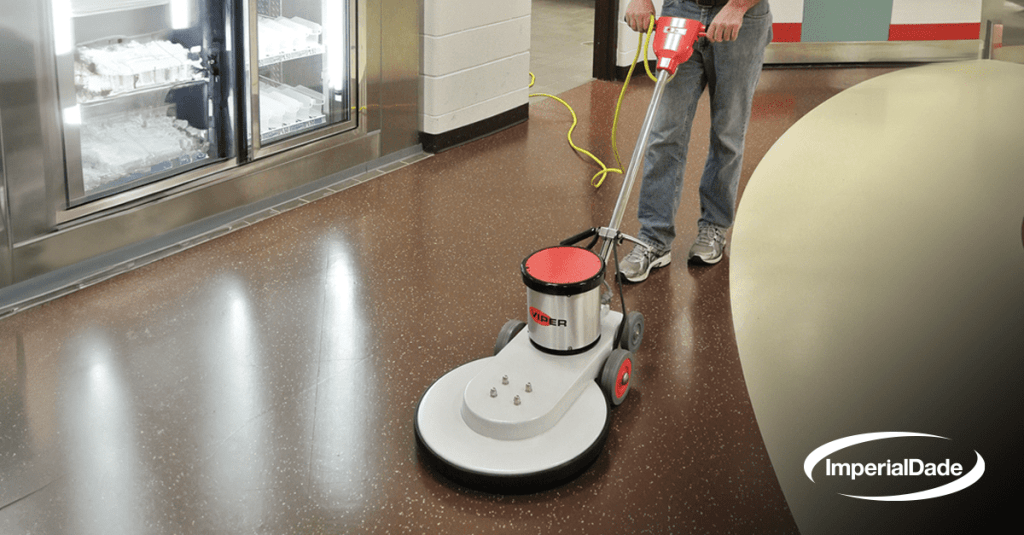
A floor burnisher is a high-speed floor polishing machine designed to give floors a shiny, reflective finish. Unlike a buffer, which operates at lower speeds, burnishers work at speeds ranging from 1,500 to 2,500 RPM (rotations per minute), allowing them to create a high-gloss, “wet-look” finish.
Pro Tip: Floor buffers and floor burnishers are two different machines. Buffers and burnishers perform different tasks, and it is important to use the proper machine for the right job. Using the wrong machine to perform a selected cleaning procedure can cause damage to your floor and equipment.
When to Burnish
Burnishing is a vital part of the floor cleaning process. When floors start to look scratched and/or dull, it’s time to break out the floor burnisher. It’s important to prepare your floors before you burnish.
How to Use a Floor Burnisher
Before we begin, let’s go over everything you need to thoroughly burnish your facility’s floors:
Materials:
- Caution Signs
Equipment:
- Dust Mop
- Floor Burnisher
- Floor Burnisher Pads
Step-by-Step Guide to Burnishing
To shine your facility’s hard floors with a floor burnisher, follow the following steps:
- Inspect the Floor
- Prepare the Area
- Select the Right Floor Pad
- Set Up the Burnisher
- Power On the Burnisher
- Start Burnishing
- Maintain Control
- Check Your Progress
- Remove Any Leftover Dust
- Conduct a Final Inspection
- Return Moved Objects
- Store Equipment
Step 1: Inspect the Floor
Inspect the floor for any damage, such as cracks, chips, or deep scratches. Repair any damage before burnishing to avoid exacerbating the issues.
Step 2: Prepare the Area
The burnishing step in a floorcare routine comes after the floor has been swept and scrubbed.
Once these steps are completed, make sure the floor is free of dirt and debris and clear the space by removing obstacles from the area you intend to burnish.
Next, place “Caution” signs around the area to alert others of the floor maintenance in progress. Close any entrances to the area you’ll be burnishing. When floors are dry and the space is completely clear, it’s time to make floors shine.
Step 3: Select the Right Floor Pad
Selecting the appropriate burnishing pad is crucial for achieving the desired finish. Pads come in various grades, typically color-coded:
- Light Pink: Eraser pad, which is good for removing scuff marks. A suitable backup pad is a hog’s hair pad, usually tan in color. This pad removes contaminants like dirt.
- Tan (soft finishes): Good for shining the floor finish with synthetic fibers and/or hog’s hair.
- Aqua (soft finishes): A harder floor pad is good for restoring high gloss to floors.
- Tan hog’s hair (hard finishes): Creates a hard gloss look.
Which pad you use will depend on the hardness of the floor finish. In general, to achieve the best shine, harder floor finishes require more aggressive pads while softer finishes respond better to less aggressive pads. It is best to try a few different floor pads and see which one works best. Some are specialized for specific floors, so testing a pad before use is a good idea.
Step 4: Set Up the Burnisher
Attach the Pad
Secure the chosen pad to the pad driver on the burnisher. Ensure it is centered and firmly attached to prevent wobbling during operation. To properly attach the pad to the burnisher, check out our article: How to Change a Floor Pad on a Floor Buffer or Burnisher [+Steps]
Check the Machine
Inspect the burnisher for any visible damage or wear. Ensure the power cord is in good condition and all safety features are operational. You want to make sure that any cords attached to the burnisher are not frayed and that the machine is in a safe condition to use.
Step 5: Power On the Burnisher
Power on your machine. If it is electric, plug the burnisher into a grounded electrical outlet and turn it on. If it is a propane or battery-operated, power on using the provided instructions.
Step 6: Start Burnishing
When you are ready to start burnishing your floor, place the machine (with the pad attached) in a leaned-back position.
The pad should not be touching the floor.
Start the machine, and then slowly lower the head onto the floor.
Begin burnishing in a corner of the room, working your way out.
Guide the machine in straight, overlapping paths to ensure even coverage.
Pro Tip: Avoid staying in one spot for too long to prevent over-polishing or burning the floor.
Move the machine in a forward motion, similar to when mowing a lawn with a lawnmower. Burnish until you have achieved a high shine.
Step 7: Maintain Control
Keep a firm grip on the burnisher handles and maintain control at all times. High-speed burnishers can be powerful, so it’s essential to guide the machine smoothly.
Step 8: Check Your Progress
Periodically stop and inspect the floor to ensure an even, glossy finish. If certain areas require more attention, go over them again with the burnisher.
If your pad gets loaded up with debris, change it out. It’s time for a new pad when you notice that you aren’t getting the same results that you were with a fresh pad.
Step 9: Remove Any Leftover Dust
After burnishing, use a dust mop to pick up any dust left behind by the burnishing process.
Step 10: Conduct a Final Inspection
Conduct a final inspection to ensure the floor is uniformly glossy and free of any marks or imperfections.
Step 11: Return Moved Objects
Return any items and objects that were removed prior to burnishing to their original positions.
Step 12: Store the Equipment
Store the equipment properly to ensure it remains in good condition.
Final Thoughts
It’s not enough to have clean floors—you need clean floors that shine. By making burnishing part of your floor cleaning operation, you can restore your floors’ original shine while extending their life as well. Take the steps outlined in this article to ensure the most thorough floor burnishing process. Take care of your floor burnisher, and it will take care of your floors.
Imperial Dade offers a variety of training courses to educate staff on floor cleaning equipment. These courses provide a wealth of information to help you optimize your business’s cleaning operation.
If you’re located in the United States, Puerto Rico, or the Caribbean, contact an Imperial Dade specialist today to schedule training for your staff.
Imperial Dade can also provide service for your floor cleaning equipment to ensure that it is always operating at peak performance, saving you time and money and ultimately improving your business’s bottom line.
Check Out Our Related Articles:
- What is Burnishing?: How to Keep Your Commercial Hard Floors Looking Great
- How to Use a Floor Buffer VS How to Use a Floor Burnisher [VIDEO]
- How to Change a Floor Pad on a Floor Buffer or Burnisher [+Steps]
- How to Repair the Most Common Floor Burnisher Issues [VIDEO]
- Your Guide to the 5 Best Floor Burnishers of 2024
- How Much Does a Floor Burnisher Cost?
- What is the Best Floor Pad for your Buffer or Burnisher? [VIDEO]
- What is the Difference Between Floor Buffers and Burnishers? [VIDEO]


