Foodservice & Kitchen Operations
Best Hot Food Containers for Merchandising in Grocery Stores + How to Choose the Right One
April 4, 2024
Cold and soggy food can be particularly unappetizing for a customer looking to purchase a grab-and-go hot meal from their grocery store. If your customers notice before the purchase, you may lose out on their business just this time. However, if they...
Cold and soggy food can be particularly unappetizing for a customer looking to purchase a grab-and-go hot meal from their grocery store. If your customers notice before the purchase, you may lose out on their business just this time. However, if they purchase the meal and bring it home, only to find it cold and soggy, the negative impact can be more lasting than the loss of a refunded item.
As a result, customers may no longer wish to purchase hot food from your store, losing you all the business from their future hot food purchases. Worse yet, they may choose to shop at another grocery store that offers hot food items, costing your store their regular grocery purchases as well.
Unhappy customers are also more likely to negatively perceive your business and leave lodging complaints and poor negative reviews online. This can cost you additional customers.
Keeping your food hot, fresh, and appealing to your customers is important to satisfy customers and your business. Selecting the best hot food containers is one of the best ways to ensure happy returning customers. Different foods have different storage needs, and several types of hot food containers meet those needs. They can also promote higher sales through presentation and certain containers can deter theft.
So, how do you pick the best hot food containers for your store? You’ll need to determine what features your hot food container needs and what product type will best suit your needs.
Hot Food Container Features to Consider
When determining the best hot food containers for your food, there are several different considerations. The most prominent are:
- Temperature Tolerance
- Heat Transfer
- Oven and Microwave Compatibility
- Ventilation
- Grooved Bottoms
- Appearance/Merchandising
- Tamper-Evident Packaging
- Sustainability
Depending on your facility’s menu, goals, and customer needs, some of these options may be more important.
Temperature Tolerance
Temperature control is one of the most important features to consider when picking your food packaging. You want a container that will keep hot food hot and cold food cold.
Whether you need hot or cold storage, polypropylene (PP) plastic containers are good at preserving food temperatures. However, you will still need to consider how they handle extreme temperatures, such as when the product is microwaved or frozen.
PP plastic, for example, is a microwave-safe container material. While some plastics are microwave-safe, they may not be suitable for oven use.
If you expect your customers to freeze or reheat your food products, you’ll want to ensure the containers are oven-safe, microwave-safe, and/or freezer-safe. A container’s temperature tolerance is an important part of this.
What is temperature tolerance? Temperature tolerance is the range of temperatures in which a container can be safely used. When temperatures exceed this range, the containers can lose their integrity, leak chemicals, catch fire, or become unusable in other ways.
When you sell hot food, you must keep it hot while on display for the customer. Your hot food container must have a high-temperature tolerance to prevent it from melting under the heat lamp or where it is being stored hot. It’s also crucial to prevent customers from burning themselves.
Heat Transfer
Heat transfer refers to how easily the container will transfer heat to a person’s hand. This is an important consideration as you do not want to cause burn injuries to staff or customers.
Microwave Compatibility
You may want microwave-safe food containers. This is especially important if you want customers to reheat in the same container. However, not all hot food containers are microwave-safe. Typically, they will need a temperature tolerance of 250°F, but that does not necessarily mean they are microwave-safe food containers. Some plastic containers will melt or leak chemicals into the food, while aluminum containers pose a fire risk if microwaved.
Oven Compatibility
You may need oven-safe food containers for your team to heat the meal. You may also consider these types of hot food containers with your customers in mind. They may prefer to have a container they can use to reheat the food later. Oven-safe food containers typically have a temperature tolerance of 400°F or more and can be made of plastic, paperboard, or aluminum.
Ventilation
Vented hot food containers can help prevent food from becoming soggy and losing its quality. Hot food can produce steam, and containers without ventilation trap the moisture inside. Ventilated containers allow steam to escape to help keep food fresh.
Hot food containers can have permanent or optional vents. Permanent vents are already part of the container or lid and cannot be altered or adjusted. Optional vents are perforated areas on a lid or container that can be removed to create ventilation when needed.
If you need to vent all your food, hot food containers with permanent vents are a great option, as your staff will never have to worry about making sure the container vents have been opened. On the other hand, if you have multiple products that need varying ventilation levels, hot food containers with optional ventilation will allow you to use the same container and adjust as needed. This can save you time and space by not requiring multiple hot food containers.
Grooved Bottoms
If your food is oily or greasy, you’ll likely want a hot food container with a grooved bottom. This prevents oils and fats from soaking into your food as it sits.
Without grooves, oil or grease can soak into the food in a flat-bottom container, potentially ruining the product for your customer.
Appearance/Merchandising
The appearance of your food is also an important consideration for merchandising. You may want a hot food container that showcases your food to appeal more directly to the customer. It can also help them identify which item they want to purchase. Typically, showcasing your food is done with a clear-lidded container or one with open sides to allow a window to view the product.
For example, if you are selling chicken parmesan, your customers will want to see that the food is fresh and not soggy. The colorful appearance may also attract new customers who would not have previously purchased the food. Perhaps you are also selling chicken alfredo out of the same case. A clear lid will also help customers identify which option they want to purchase immediately.
Tamper-Evident Packaging
Depending on your market, tamper-evident packaging may be an important feature.
Pro Tip: What is tamper-evident packaging? Tamper-evident packaging has a secure barrier or barriers that, when opened, clearly display to consumers that tampering has occurred or that the product has been altered in some way.
These containers can be as simple as a sticker over the side. Others have special snaps on the outside of the container.
Tamper-evident packaging helps assure your customers that other patrons have not touched or tampered with the food. This can increase sales, as customers are more confident they are buying safe food. Tamper-evident packaging can also help deter theft. It can help prevent thieves from taking anything out of the container and make it more difficult for them to hide additional items under the lid.
Best Hot Food Containers
Given the many options available, determining what type of hot food container is the best option can be difficult or overwhelming. This article aims to provide guidance in that decision.
There are three main types of hot food containers used in grocery store merchandising:
- Hot Food Containers for Food
- Hot Soup Containers
- Roast Chicken Containers
While many options exist for each purpose, some are better than others. Let’s look at the best options for each use.
Best Hot Food Container Substrate for Food
- Aluminum Containers
- Polypropylene Containers
Best Hot Soup Containers Substrate
- Paper Hot Soup Containers
Best Roasted Chicken Container Substrate
- Polypropylene Roast Chicken Containers
- Polypropylene Roast Chicken Bags
Each of these options has pros and cons. It’s important to consider your needs before selecting the appropriate container.
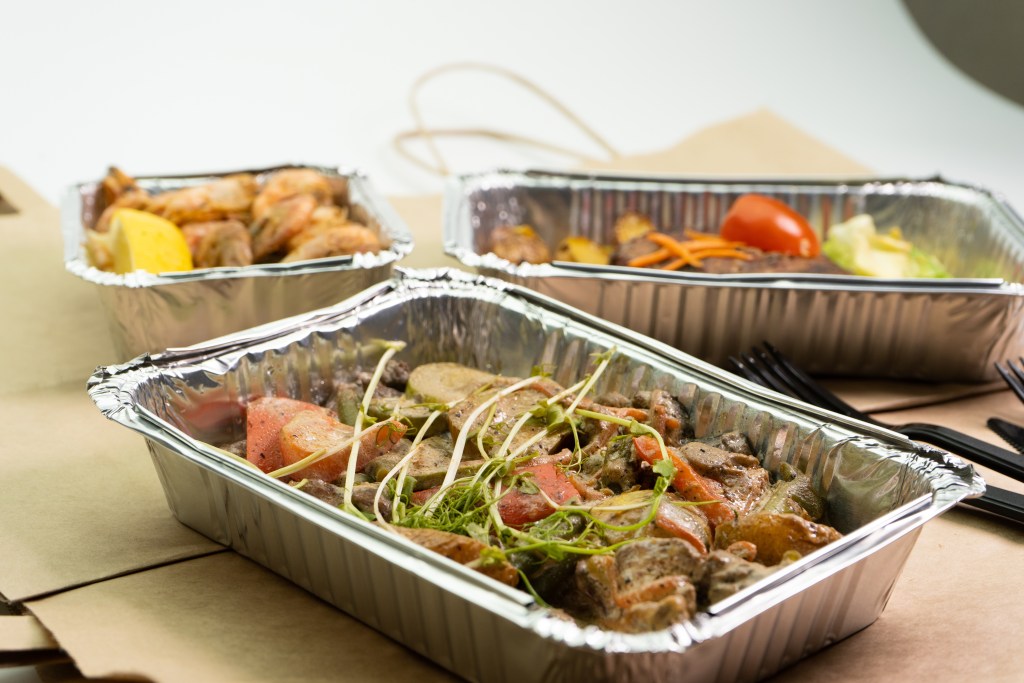
Aluminum Hot Food Containers
Aluminum containers are the best option if you’re looking for a hot food container with high versatility.
Temperature Tolerance
With a high-temperature threshold of up to 400°F, these hot food containers are ideal for oven and heat lamp use.
Heat Transfer
Aluminum does not effectively conduct or absorb heat. Instead, it reflects heat waves. Because of this, aluminum cools almost immediately after being removed from the heat source. Therefore, the risk of burns for your customers and staff when removing the product from a food warmer is low.
Microwave Compatibility
Aluminum containers are not microwave-safe. The heat waves generated by microwaves can overwhelm the thin metal, causing the aluminum to heat up quickly and potentially catch fire.
Oven Compatibility
Aluminum containers are oven-safe, which means you can cook the food in the package without transferring it to a new container. Your customers can also use them to reheat their leftovers in the oven.
Ventilation
There are several types of lids for aluminum hot food containers, including paperboard, plastic, and aluminum. Paperboard lids are the most cost-effective option, but they typically do not have ventilation. Aluminum lids are great if you cook in the same container as you are merchandising. If you want to showcase the product inside, your best option is a clear plastic lid. However, keep in mind plastic should not be heated. Both plastic and aluminum lids can be purchased with ventilation features.
Grooved Bottoms
Aluminum hot food containers do not have grooved bottoms but rather flat bottoms. For certain hot food items, a flat bottom is not the most appealing option. However, the absence of grooved bottoms makes some hot foods susceptible to sogginess and grease absorption.
Appearance/Merchandising
Using an aluminum hot food container can make showing off your food difficult. Paperboard and aluminum containers completely cover the food, making it impossible for people to see what it looks like. If you use a plastic lid without ventilation, the steam can fog up the plastic, making it difficult for customers to see the food.
Tamper-Evident Packaging
There are no aluminum tamper-evident containers. However, you can seal packages with stickers, such as the purchase label, for a tamper-evident package. The sticker will be perforated when the package is opened.
Sustainability
Aluminum is infinitely recyclable when done properly. This means that aluminum containers need to be cleaned and dried with no food remnants to be recycled. You’ll also need to verify that a facility near you accepts aluminum for recycling. Paper lids may also be recyclable if they are cleaned. If they are lined with polylactic acid (PLA), they may also be compostable.
While aluminum containers are one of the most cost-effective options on the market, they may not meet your or your customers’ needs.
If aluminum containers are not the right fit for your hot food merchandising, a polypropylene container is another great option.
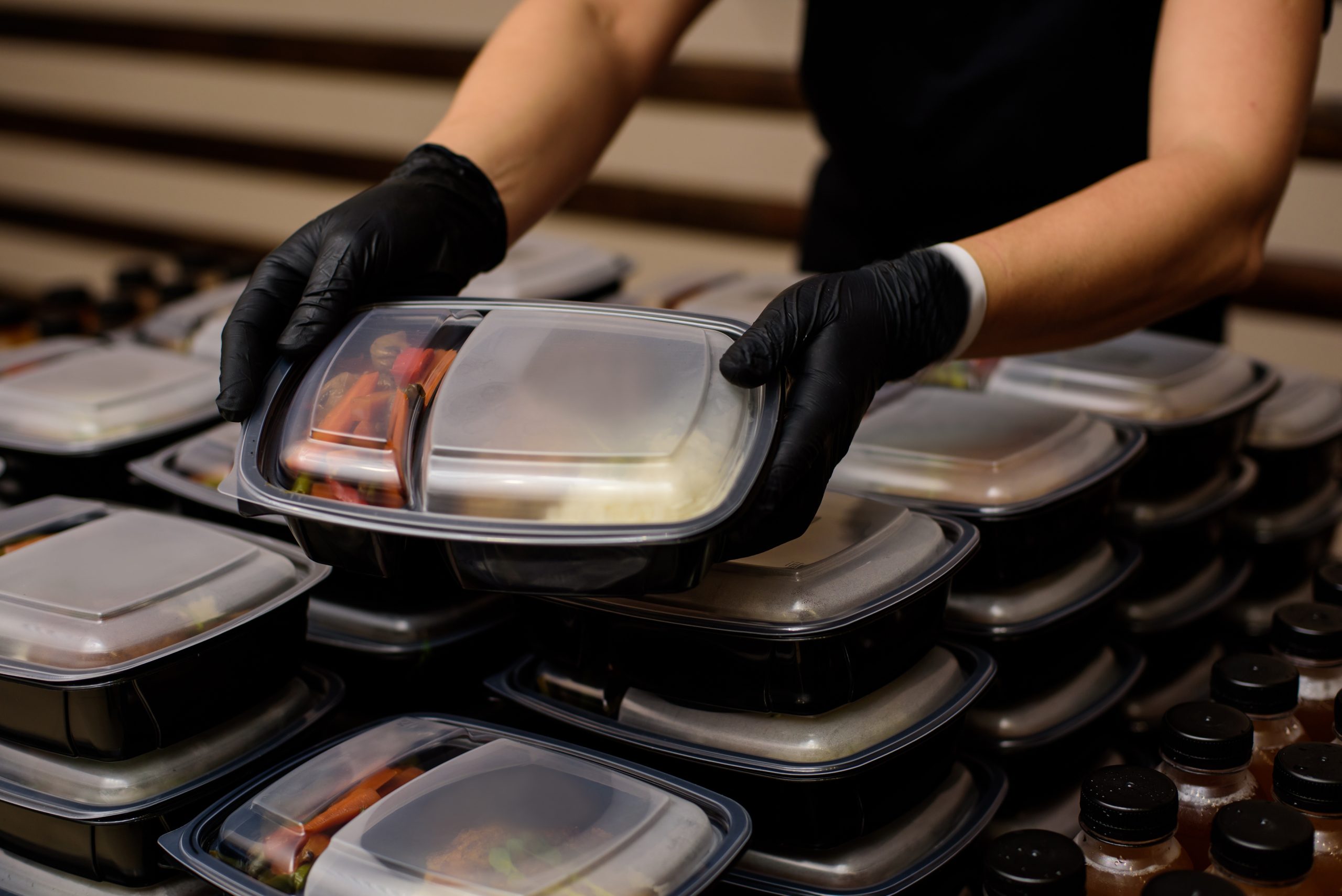
Polypropylene Hot Food Containers
Polypropylene containers are another versatile option for general hot food use. They also come in various shapes and sizes, which is less extensive than aluminum. Some polypropylene hot food containers have multiple compartments, which are great for individual meals with multiple food items.
Temperature Tolerance
A temperature tolerance of up to 230°F also makes it great for heat lamp use. It will not warp or leak chemicals into the food.
Heat Transfer
Polypropylene hot food containers conduct heat. The risk of burns is low when taken from the hot food case. However, if your customer microwaves the container, there is a higher risk of burns from touching the plastic.
Microwave Compatibility
They are also microwave-safe, which can be appealing to your customers because they can reheat leftovers in the same container.
Oven Compatibility
Polypropylene hot food containers are not oven-safe. With a temperature tolerance of only up to 230°F, the containers will melt in the oven.
Ventilation
Some polypropylene hot food containers can be paired with vented lids to help prevent sogginess. Not all manufacturers offer vented lids, so you’ll want to confirm that your lids are vented before purchasing.
Grooved Bottoms
Grooved bottoms are available with polypropylene hot food containers to help prevent food from sitting in grease or oil collected at the bottom. You’ll want to confirm before purchasing, as this option is not available with every container.
Appearance/Merchandising
Polypropylene containers with clear lids can help showcase your delicious food and attract more customers with their visual appeal. They are also immediately visible, deterring shoplifters from filling containers with other items, reducing theft and saving you money.
Tamper-Evident Packaging
Polypropylene hot food containers are available in tamper-evident selections. Some of these options have snaps on the outside of the container, while others have strips that must be torn off to open the package. You can also place stickers over the seal to create tamper-evident packaging.
Sustainability
While a considerable amount of plastic can be in the container, more recycling programs are accepting properly cleaned polypropylene products.
Containers can have separate or hinged lids. Hinged lids ensure that you never have to worry about lid fit. However, they may take up additional storage space.
Although they are more expensive than aluminum containers, there is a wide range of pricing for polypropylene hot food containers that can fit your budget.
While there are more options for hot food containers on the market, polypropylene and aluminum containers are the best hot food containers for general use due to their versatility and effectiveness.
Hot Soup Containers
There are several different types of hot food containers for soups, but paper containers are typically the best option.
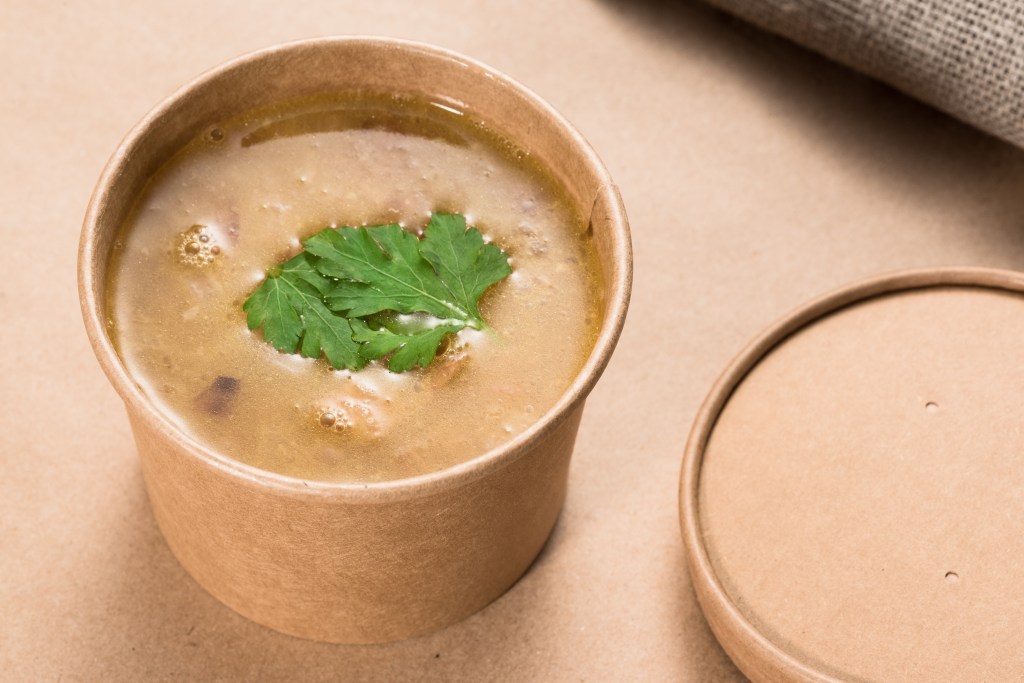
Hot soup containers have historically been made of poly-coated paper, which is generally preferred by customers and what we are talking about below. Paper looks and feels better than plastic or polypropylene, and customers are more comfortable using it.
Temperature Tolerance
Paper containers are a great option if you need to use a hot lamp. They can withstand temperatures up to 180°F.
Heat Transfer
Paper hot soup containers do have a potential burn risk as the heat from the soup seeps through the paper. However, manufacturers have taken different steps to reduce that risk. A double-wall design has two separate layers of paper with an air gap in between that traps the heat, preventing the outer surface from becoming too hot. Others are coated with a heat resistant material on the outside.


