Floor & Carpet Care
How to Effectively Clean School Gymnasiums, Auditoriums, and Multi-Use Areas: Best Practices & Pro Tips
March 6, 2025
Cleaning and managing the large, multi-use areas in your educational facilities can be an enormous logistical challenge. Maybe you’re dealing with heavy foot traffic and rapid resoiling, where floor maintenance and safety concerns are top of mind....
Cleaning and managing the large, multi-use areas in your educational facilities can be an enormous logistical challenge.
Maybe you’re dealing with heavy foot traffic and rapid resoiling, where floor maintenance and safety concerns are top of mind. Or perhaps you’re having trouble with odor control, or reaching high-ceilings and other hard-to-reach areas and need an effective game plan to tackle them. You could even be struggling with the limited amount of cleaning time between events in these multi-purpose areas–or worse, struggling with the labor requirements to make it happen.
Cleaning and maintaining gymnasiums, auditoriums, and other large multi-use areas in schools requires strategic planning, the right equipment, and consistent scheduling.
You may be wondering why we are covering gymnasiums, auditoriums and other large multi-purpose areas in the same article. Generally, these areas experience similar logistical problems and their solutions can be applied in many situations.
No matter what area you are trying to clean in your school, you’ll find solutions here!
Why is Cleaning Important in Multi-Use Areas?
Cleaning is vital in multi-use areas in schools because it creates a positive learning environment for students by reducing the spread of germs, improving student health, and promoting good hygiene habits. Regular cleaning can lead to fewer sick days for students and staff.
Maintaining high cleaning standards can even promote better mental health and foster a sense of pride towards the school.
How to Clean a School Gymnasium
Keeping your school gymnasium in top shape is crucial because it helps prevent the spread of germs and creates a healthy and inviting environment for students to exercise in.
Here are some tips and tricks to promote the kind of gym environment your students need:
Quick Tips for Cleaning Gymnasiums
Don’t have time to read the entire section? Here are our quick tips for cleaning gymnasiums in schools:
- Dry Mop Daily: Use a microfiber dust mop to remove dust and debris before they scratch the floor.
- Use a Floor Scrubber: Use a neutral pH cleaner with a floor scrubber for deep, efficient cleaning without damaging the finish.
- Spot-Clean Spills Immediately: Prevent sticky residue and stains by having a spill response kit on hand.
- Control Humidity: Keep gym floors in top shape by maintaining 40-60% humidity to prevent warping.
- Use Entrance Mats: Reduce dirt tracking by placing walk-off mats at every entrance.
Key Areas of Focus:
- Daily Cleaning Tasks
- Floor Care
- Odor Control & Disinfection
- Preventative Maintenance
1. Daily Cleaning Tasks
The single most effective way to maintain your gymnasium is by completing daily cleaning tasks. These should include:
- Sweeping and dust mopping the floors to remove debris.
- Disinfecting high-touch surfaces, including bleachers, door handles, railings, and sports equipment, to stop the spread of germs.
- Spot-cleaning spills and stains immediately to prevent damage to surfaces and slip-and-fall accidents.
2. Floor Care
Floor care is another pivotal component of maintaining your gymnasium and preventing injuries. Remember to:
- Use a floor scrubber with a neutral pH floor cleaning chemical to efficiently clean hardwood or synthetic gym floors. Floor scrubbers are not recommended for a new floor or newly sanded floor, so use a wet mop for those.
- Re-coat your gym floors periodically with a floor finish that is compatible with your floor to maintain slip resistance and floor durability.
- Ensure mats and entryway rugs are in place to reduce dirt and grit tracking.
3. Odor Control & Disinfection
One of the more noticeable maintenance steps (especially if you neglect it) is odor control and disinfection. Bad smells in any setting can ruin the overall enjoyment or perception of that setting. To combat this, consider:
- Regularly cleaning your HVAC and ventilation systems, their air vents, and replacing their filters to maintain indoor air quality.
- Using odor-neutralizing solutions in locker rooms, around team benches, and other high-traffic areas.
4. Preventative Maintenance
Finally, preventative maintenance will make sure your gymnasium stays functional before it can wear down in the first place. Don’t forget to:
- Inspect the bleachers, scoreboards, backboards, and other equipment regularly for safety and maintenance needs. Replace or repair equipment as soon as wear or damage is discovered to prevent further wear or damage.
- Repair floor scratches or damage as soon as possible to extend longevity and prevent injury.
How to Clean a School Gymnasium (Checklist)
Maintaining a clean gymnasium is essential for safety, hygiene, and floor longevity. Follow this structured cleaning routine to keep your school gym in top condition:
Daily:Weekly:Monthly:Seasonally:Prep & Safety
CheckSpot Clean Spills & Scuffs
Remove Loose Debris
Disinfect High-Touch Areas
Auto-Scrub the Floor (as needed)Vacuum & Clean Entry Mats
Mop Along Baseboards & Corners
Inspect & Maintain Floors
Clean Walls, Ceilings, & Vents
Floor Conditioning & Recoating
Equipment & Safety Check
Strip & Refinish Floors (if required)
Wash Windows & Light Fixtures
How to Clean a School Auditorium
Cleaning your school auditorium matters because it keeps students healthy, creates a positive learning environment, and contributes to a more productive space for students and staff taking part in school assemblies, performances, and other events.
Quick Tips For Cleaning Auditoriums
Don’t have time to read the entire section? Here are our quick tips for cleaning auditoriums in schools:
- Vacuum Seating & Carpets Daily: Use a backpack vacuum for faster cleaning between rows of seats.
- Steam Clean Monthly: Deep clean upholstered seats and carpets with a steam cleaner to remove dust, allergens, and odors.
- Wipe Down Armrests & Railings: Use disinfecting wipes or to keep high-touch surfaces germ free.
- Dust Light Fixtures & Vents: Use a lift or an extendable duster to remove cobwebs and dust from high areas.
- Check for Chewing Gum: Use gum remover spray and a scraper to remove gum from seats and floors
Key Areas of Focus:
- Seating & Upholstery Care
- Stage & Equipment Cleaning
- Flooring Maintenance
- Indoor Air Quality
1. Seating & Upholstery Care
Seating and upholstery care is one of the more unique aspects of school auditorium cleaning, because the seats can be made of a variety of materials that need to be cleaned in different ways. Consider the following:
- Use a vacuum, carpet spotter, or steam cleaner to clean upholstered seating, depending on the severity of the soil.
- Remember to use fabric safe cleaners for spot treatment on upholstery.
- Disinfect armrests, seat backs, and other high touch areas on seats, as well as on plastic, wooden, or metal seats.
- Use gum remover spray and a scraper to remove gum from seats and floors.
2. Stage & Equipment Cleaning
Another factor to consider is stage and equipment cleaning. Stage equipment can be finicky and needs to be handled and cleaned with care. Regularly:
- Dust and wipe down stage flooring, curtains, and lighting fixtures. Never spray water or cleaning solution directly onto lighting fixtures as this can cause permanent damage.
- Ensure AV equipment and microphones are properly cleaned and stored. Again, do not spray water or cleaning solution directly onto electronic equipment.
- Use a lift or an extendable duster to remove cobwebs and dust from high areas.
3. Flooring Maintenance
Flooring maintenance can be multifaceted in school auditoriums because they tend to include both carpeted and hard-floor areas. To clean each:
- Use a high-powered vacuum and carpet spotter for carpeted areas.
- Use a floor scrubber for aisles and a wet mop in the seating area. Your autoscrubber will likely be too large to fit into the seating area itself. Remember to choose the right floor pad and floor care chemical for the type of hard flooring you are cleaning.
- Address stains and spills quickly to prevent long-term damage.
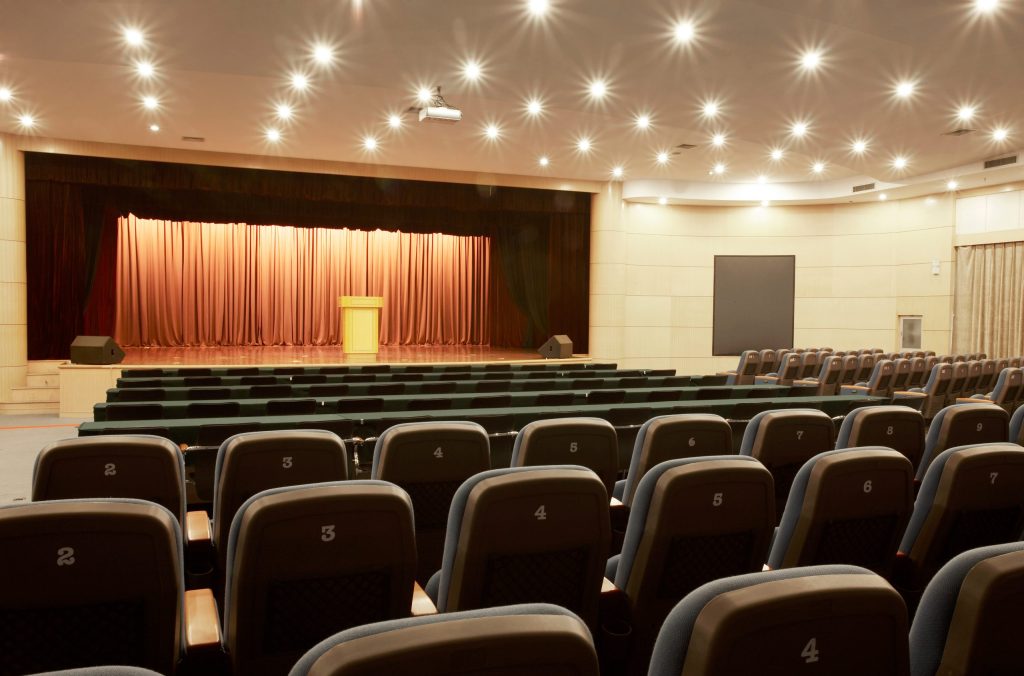
A hightech school auditorium with stateoftheart audiovisual equipment
4. Indoor Air Quality
Just like our guide for gyms, indoor air quality is an important factor to consider in auditoriums as well. For best results:
- Ensure air filters and ventilation systems are maintained and cleaned regularly to control dust and allergens.
- Use odor-neutralizing solutions in high-traffic areas.
- Address stains and spills quickly to prevent unpleasant odors.
How to Clean a School Auditorium (Checklist)
Maintaining a clean auditorium is essential for providing a comfortable and hygienic environment for students, staff, and visitors. Follow this structured cleaning routine to ensure your school’s auditorium stays in top condition.
Daily:Weekly:Monthly:Seasonally:Prep & Inspection
Trash & Debris Removal
Seat & Armrest Cleaning
Vacuum & Floor Cleaning
Clean High-Touch AreasDeep Vacuuming & Carpet Spot Cleaning
Clean Stage and Backstage Areas
Seat & Upholstery Deep Cleaning
High Dusting: Clean Ceilings, Light Fixtures, & Vents
Shampoo Carpets & Refinish Floors
Wash Windows & Stage Curtains
Repair & Preventative Maintenance


