Floor & Carpet Care
How to Clean Stairs: Tips for Safer, More Effective Stairwell Cleaning
July 3, 2025
earn how to properly clean stairwells with this step-by-step article. Discover the tools you need, cleaning techniques for a variety of stair types, safety tips, and how often to clean to maintain a safe, professional appearance.
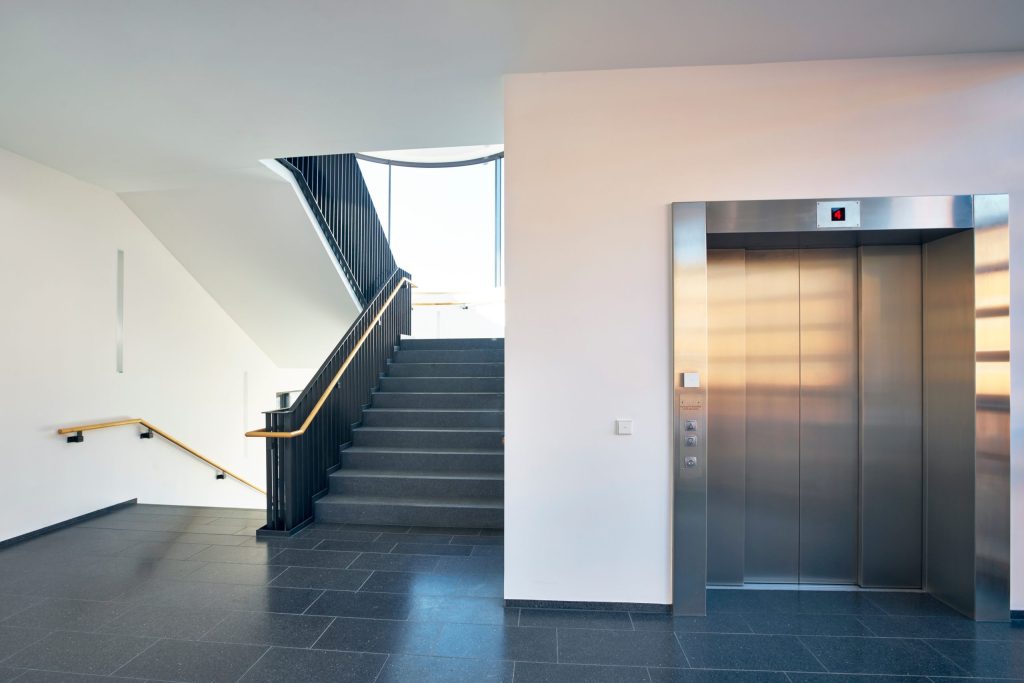
Stairwells are one of the most overlooked yet most visible areas in any facility. Whether in schools, office buildings, hospitals, hotels, or public spaces, stairwells often endure high foot traffic and are exposed to dirt, dust, and debris. Unfortunately, they’re usually not given the same attention as lobbies or restrooms, even though dirty or neglected stairs can also make a negative impression and pose real safety hazards.
Dust buildup, litter, sticky spills, and slick surfaces can lead to slips, trips, and falls. If left untreated, grime can cause lasting damage to stair treads, handrails, and flooring materials. A well-maintained stairwell, on the other hand, promotes safety, cleanliness, and a positive perception of your facility.
This article will walk you through the proper cleaning steps and preventative maintenance tips you need to keep your stairwells clean, safe, and presentable.
How Often Should Stairwells Be Cleaned?
The frequency of stairwell cleaning depends on the type of facility, foot traffic levels, and the materials used in the stair construction. However, because stairwells are both highly visible and safety-critical, they should be included in your regular cleaning schedule.
Daily or Routine Cleaning
In high-traffic environments like schools, hospitals, office buildings, and hotels, stairwells should be cleaned daily or at least every shift.
This includes basic tasks like sweeping or vacuuming steps, wiping down handrails, and spot cleaning spills or dirt buildup.
Keeping up with these daily tasks helps prevent grime from accumulating and becoming more difficult to remove later.
Weekly Deep Cleaning
In addition to daily maintenance, stairwells should receive a weekly deep cleaning.
This is when your team can scrub hard surfaces, extract carpets, and thoroughly disinfect all touchpoints.
This level of attention helps preserve the condition of the surfaces and supports a more hygienic environment.
Monthly or As-Needed Maintenance
For stairwells that see less frequent use, such as emergency exits or staircases in storage wings, a monthly cleaning may be sufficient. However, these areas should still be monitored regularly.
Facilities that experience seasonal changes, such as leaves in the fall or salt and moisture in the winter, may need to adjust cleaning frequency during those times.
Post-Incident or Special Circumstances
If a spill, leak, or other unusual incident occurs in the stairwell, cleaning should happen immediately, regardless of the regular schedule. This is also the case when there’s a noticeable buildup of dust, litter, or cobwebs.
Likewise, if there’s construction nearby or if pest activity is detected, a more intensive cleaning might be necessary to maintain hygiene and safety standards.
How to Clean Stairwells Thoroughly and Efficiently
Before beginning the cleaning process, gather the appropriate tools and materials. Using the right equipment not only improves cleaning outcomes but also reduces strain and improves efficiency for your custodial staff.
Tools Needed
- Crevice tool or wand attachment
- Push broom or handheld broom
- Dustpan
- Wet mop and mop bucket (for hard surface stairs)
- Deck brush or handheld scrub brush
- Soft-bristle brush
- Microfiber cloths or disposable wipes
- Extension poles (for high dusting)
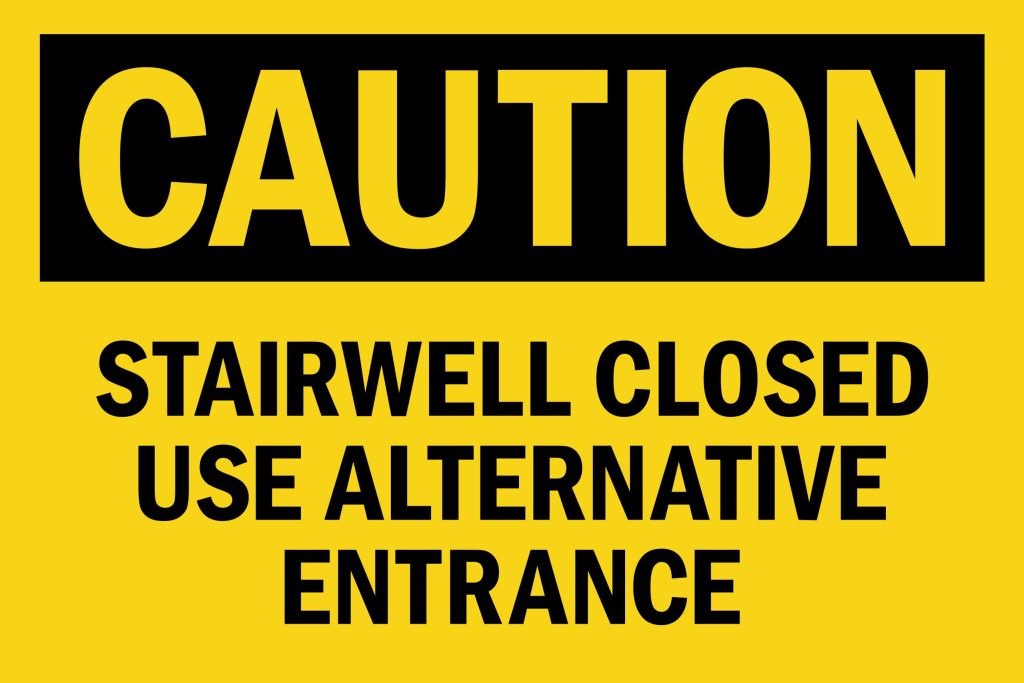
- Safety signage (e.g., “Wet Floor” or “Stairwell Closed” signs)
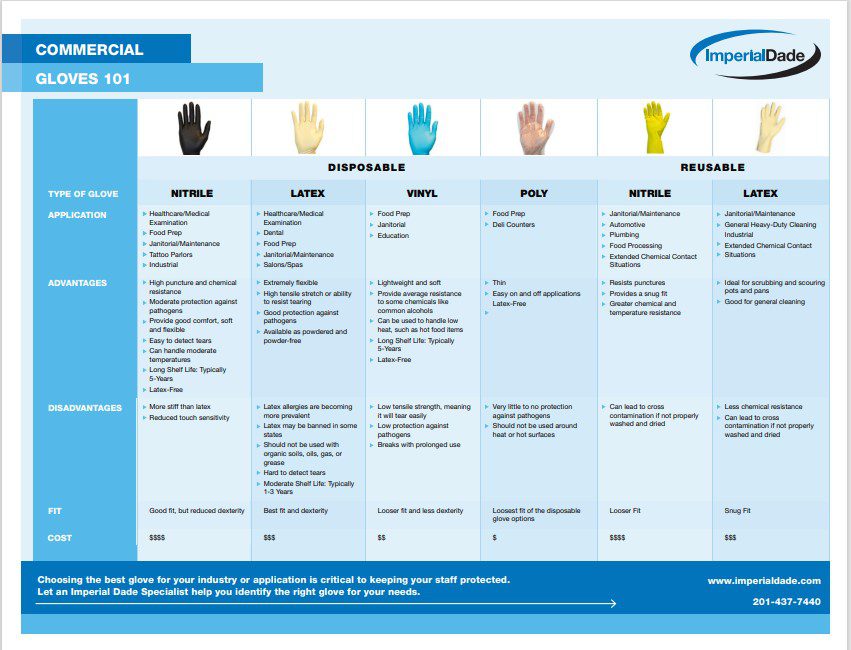
- PPE, including disposable gloves, slip-resistant footwear, eye protection (if using chemical sprays)
Materials Needed
- Neutral pH floor cleaner (safe for rubber, vinyl, tile, or concrete)
- Carpet-safe spot cleaner
- Disinfectant spray or wipes (safe for handrails and touch points)
Equipment Needed
- Backpack vacuum (preferred) or canister vacuum with long hose
- Portable carpet extractor (optional for deep cleaning)
- Extension cord
- Air mover or floor fan
Step-by-Step Guide to Cleaning Stairwells
To clean stairwells thoroughly, it’s important to have a deliberate, top-down approach that ensures safety, cleanliness, and efficiency. Here are the recommended steps:
1. Prepare the Area
2. Remove Large Debris
3. Backpack Vacuum the Stairs
4. Put on PPE
5. Spot Clean and Scrub
6. Disinfect High-Touch Areas
7. Final Check and Drying
1. Prepare the Area
Before any cleaning begins, it’s essential to secure the area to protect both the cleaning staff and anyone who might use the stairwell.
Place wet floor signs or caution cones at both the top and bottom of the stairwell. If possible, close off access to the stairwell entirely while cleaning is in progress. This prevents slip hazards and allows the cleaning to happen uninterrupted.
Make sure that all of your tools, cleaning products, and PPE (personal protective equipment) are ready to use and within easy reach before starting. This minimizes unnecessary trips up and down the stairs, which can waste time and create risk.
2. Remove Large Debris
The first active cleaning step is to remove any large debris from the stairs. This includes trash, paper scraps, leaves, food wrappers, and any other loose materials that could obstruct cleaning or create tripping hazards.
Begin at the top of the stairwell and work your way down, either sweeping debris down to the bottom landing with a handheld broom or collecting it by hand wearing gloves.
Gathering loose materials before vacuuming makes the process faster and prevents the vacuum from clogging or losing suction due to oversized items.
3. Backpack Vacuum the Stairs
Once the stairwell is clear of large debris, it’s time to vacuum. Thorough vacuuming is one of the most important steps in stairwell cleaning because it removes dust, dirt, hair, and fine particles that contribute to both poor air quality and slippery surfaces.
Start at the top step and work your way down to avoid tracking dirt back onto clean stairs.
Use a backpack vacuum if available, as it allows for increased mobility and reduces the need to lift or drag equipment up and down the stairs.
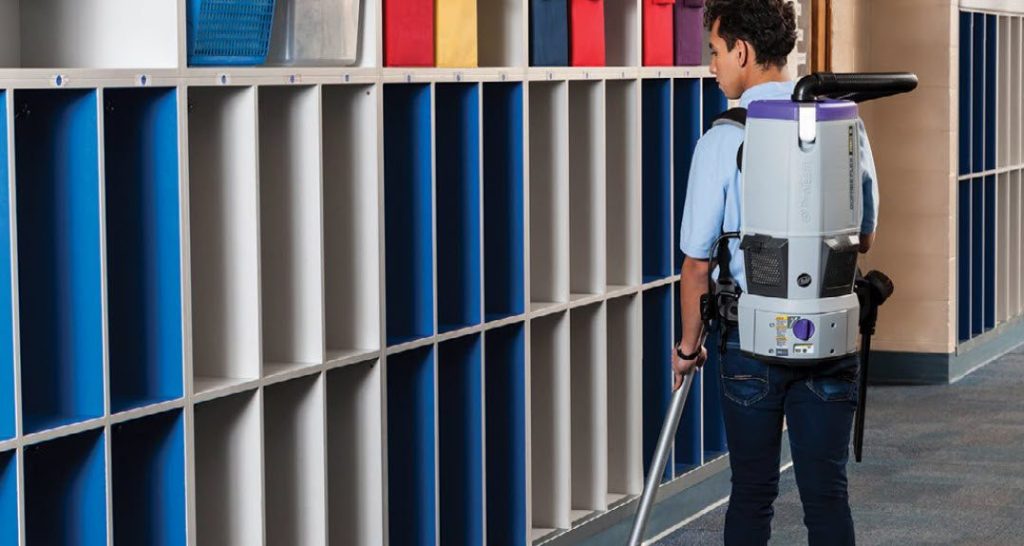
Pro Tip: Many stairwells do not have an electrical plug, so a backpack vacuum is the way to go.
For tight corners and edges, use a crevice tool or wand attachment to reach under handrails and along the wall. Pay attention to each tread and riser, including the vertical surface of each step, which can accumulate dust and cobwebs.
If a backpack vacuum isn’t available, a canister vacuum with a long hose and an extension cord can also be used safely and effectively.
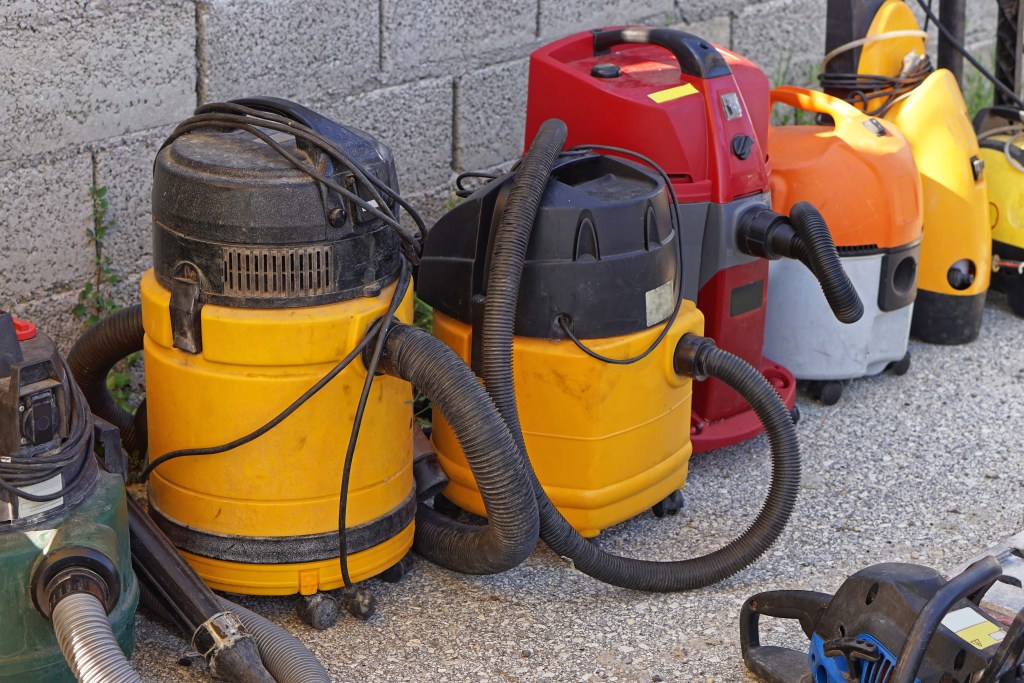
Pro Tip: If you are using a corded vacuum, secure the cord to your belt or shoulder strap to avoid tripping or dragging dirt back onto cleaned stairs.
4. Put on PPE
Before handling any chemicals, it is imperative to put on the necessary personal protective equipment. For spot-cleaning and disinfecting stairwells, safety goggles, disposable gloves, long sleeved clothing, and closed-toe, slip-resistant shoes should be worn to protect yourself.
5. Spot Clean and Scrub
After vacuuming, inspect the stairs for sticky spots, stains, or ground-in grime. This is especially important in high-traffic areas or in stairwells connected to exterior doors, where dirt from shoes tends to accumulate.
The process is a bit different for hard floor stairs and carpeted stairs so let’s take a look at each.
Hard Floor Stairs
If the stairs are made of hard materials like rubber, tile, vinyl, or sealed concrete, use a neutral pH cleaner. Use a ready to use chemical or dilute with water according to the manufacturer’s instructions.
Apply the solution using a wet mop or scrub brush, beginning at the top of the stairwell and working downward. This top-down approach helps control moisture and minimizes the risk of slipping on wet surfaces.
For particularly stubborn stains or dried spills, use a handheld scrub brush to agitate the area and break up the residue. Wipe or mop the area clean once the grime is loosened.
Carpeted Stairs
For carpeted stairs, treat visible stains or soiled areas with a carpet-safe spot cleaner.


