Foodservice & Kitchen Operations
Organics Policy and Composting Regulations: A Guide to Laws in Your Area
November 9, 2023
Dealing with organic waste can be tricky for consumers and businesses alike, especially with regulations that are often complex and challenging to navigate.  For businesses, it’s even more critical to comply. Failing to comply can lead to...
Dealing with organic waste can be tricky for consumers and businesses alike, especially with regulations that are often complex and challenging to navigate.
For businesses, it’s even more critical to comply. Failing to comply can lead to dissatisfied patrons and legal issues, so it’s crucial to be aware of the rules in your local area. By following the regulations, however, you can promote sustainable practices while avoiding any legal problems that may arise.
To ensure that your business has an effective and legal means of disposing of compostable food packaging, it’s essential to understand the various laws and guidelines governing the process in your state.
In this guide, we’ll walk you through an overview of statewide waste diversion, composting, and organics recycling policies relevant to your industry so that you can conduct business responsibly and in compliance with local laws.
Table of Contents:
Chapter 1: Terms to Know: Waste Diversion, Composting, and Organics Recycling
Chapter 2: How Does Legislation Affect Your Area?
Chapter 3: Policies by State
Chapter 4: What Can We Do to Help?
Chapter 1: Terms to Know: Waste Diversion, Composting, and Organics Recycling
Before looking at the policies, we’ll help you understand the different green terms that are used. By understanding these terms, you’ll be able to decide which programs or policies you’ll have to add or implement to your foodservice operation to comply with state laws.
What is Waste Diversion?
Waste diversion is the practice of reducing the volume of waste in landfills by diverting it elsewhere.
Instead of relying on conventional waste disposal methods, waste diversion focuses on environmentally responsible and resource-efficient processes. This approach aims to mitigate the environmental impact of waste disposal while promoting sustainable resource management.
There are several methods of waste diversion, including
- Recycling
- Organic Recycling
- Source Reduction
- Reuse
- Waste-to-Energy
- Composting
Waste diversion programs are driven by growing environmental concerns, government regulations, and the need to optimize how we utilize our resources. By keeping waste out of landfills, waste diversion contributes to environmental sustainability, conserves natural resources, and often results in long-term cost savings for commercial enterprises.
What is Recycling?
Recycling involves collecting and processing materials like paper, glass, plastics, and metals to create new products.
Organic Recycling
Organic recycling involves collecting and processing organic materials like food scraps, lawn clippings, and compostable food packaging to create new products.
What is Source Reduction?
Instead of waiting for waste to be generated, source reduction aims to prevent waste generation by encouraging responsible consumption and minimal use of disposable products.
What is Reuse?
Almost all manufacturing and production facilities generate some amount of waste. On a commercial scale, reuse is the process of minimizing the waste that needs to be disposed of by using as much of the scrap metal as possible in the production process. More typically, reuse can also refer to the act of reusing items more than once prior to disposal.
What is Waste-to-Energy?
Waste-to-energy is the process of generating energy in the form of electricity, heat, or steam from the treatment of waste. This process involves burning waste materials in a controlled environment, which produces high temperatures that are then used to create energy. The waste comes from a variety of sources, including municipal solid waste, industrial waste, and agricultural waste.
What Does Biodegradable Mean?
If something is biodegradable, that means it can undergo a process where materials get broken down into simple, organic compounds, like biomass, carbon dioxide, and water.
Another way to look at it is that biodegradable materials are just materials that naturally break down into organic materials over time. This works because microorganisms like bacteria and fungi are able to break the biodegradable material down into organic matter that is then reabsorbed back into the earth.
There are a few factors that can affect how long it takes biodegradable materials to break down, including material type, whether it’s processed or left in a landfill, temperature levels, light levels, moisture levels, and air levels.
If left in a landfill, biodegradable food packaging will still biodegrade, but it will have a more significant impact on the environment. In fact, it can take hundreds of years for something to biodegrade in landfill conditions.
What is Composting?
Composting is the process of organic waste returning to the earth through recycling and reuse.
Compostable food packaging has two key characteristics that differentiate it from biodegradable or other food packaging. First, it must be able to break down within a specified timeframe. Typically, in commercial composting, the time frame only covers a couple of months. Second, it must also decompose naturally into the earth without leaving even a trace of toxic residue.
It is important to note that not all compostable packaging can break down naturally in a landfill. Composting requires a certain process involving heat, humidity, and microorganisms to help decompose waste and convert it into biomass and other inorganic substances. This form of composting takes place in a commercial composting facility.
Home Composting vs. Commercial Composting
Home composting has limitations compared to commercial composting.
The biggest difference is that home composting can’t handle a wide range of organic materials. Some items, like compostable food packaging, may not fully decompose in a backyard compost pile.
In contrast, commercial composting facilities can process a broader spectrum of organic materials thanks to the controlled conditions they maintain.
It’s important to note that the organic waste accepted at commercial composting facilities often requires higher and more consistent composting temperatures to get the job done. This temperature difference is required to effectively break down various types of organic matter and ensure the final compost is safe for use.
What is Organics Recycling?
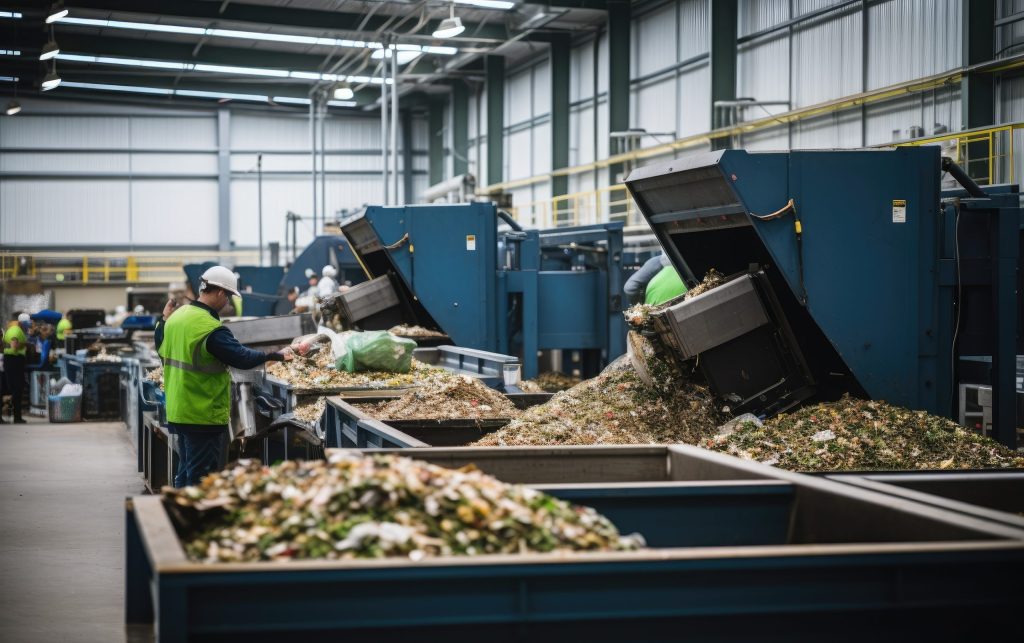
Organics recycling is the process of collecting and processing organic waste materials, such as food scraps, yard waste, and other biodegradable or compostable materials.
This process aims to convert these organic waste materials into valuable compost. Similarly, organics recycling laws aim to reduce the amount of organic waste sent to landfills and incinerators, thereby minimizing environmental impacts and promoting sustainable efforts.
Key components of organics recycling include collection, transportation, processing, and usage.
First, organic waste is separated from other types of waste at the source, typically through separate collection bins or containers. This part of the process is the same for households, businesses, and municipalities. Then, collected organic waste is transported to facilities where it can be processed. These facilities may be composting sites, anaerobic digestion facilities, or other specialized plants.
At the processing facilities, organic waste undergoes decomposition, which can occur through various methods, including composting and anaerobic digestion. The decomposition process relies on microorganisms to break down organic materials into products that can be used, typically nutrient-rich compost or biogas. The resulting compost or biogas can be used for various purposes, including soil enrichment, renewable energy production, and soil conditioning.
Efforts to implement organic recycling programs vary by region. They are often driven by environmental concerns, waste reduction goals, and regulatory mandates aimed at reducing the environmental impact of organic waste disposal.
Chapter 2: How Does Legislation Affect Your Area?
As a business, it can be difficult to understand your state’s laws and how they affect you, especially when these definitions get amended over time.
If not already in place, your business will have to implement a recycling program to meet the organics recycling, waste diversion, and composting requirements mandated by your respective state if applicable.
These programs involve establishing contracts with waste haulers, setting up dedicated sorting stations with clear signage, providing continuous employee training, and, perhaps most importantly, fostering employee engagement. One of the best ways to facilitate participation and reduce concerns about contamination is to introduce compostable products like liners and food service wares to your business.
Still, it’s important to recognize that policies and regulations related to composting can vary significantly from state to state.
Some states have comprehensive laws that address various aspects of composting, from the types of materials accepted to the processing methods employed. In contrast, other states have more limited regulations that apply only to specific facilities or operations. As a result, it’s crucial to thoroughly research the specific laws and regulations applicable to your location.
Alternatively, you can collaborate with knowledgeable partners like Imperial Dade to ensure compliance and avoid potential penalties. Non-compliance with these regulations can lead to consequences, including fines, penalties, and legal action.
Chapter 3: Policies by State
Did you know that 4-10% of food and food packaging purchased by the foodservice industry is thrown out before reaching customers? Unfortunately, most of it ends up in landfills. As a result, nearly 45% of the waste that makes up all materials landfilled in the United States comprises food and food packaging containers.
To address this concern, many state governments are focused on promoting responsible organic waste management and composting practices through various laws and regulations.
These efforts are typically made up of waste diversion, composting, and organics recycling laws aimed at minimizing the impact of organics waste. Encouraging businesses to manage their organic waste properly, these laws help states reach their organics waste diversion goals while promoting sustainable practices.
In this chapter, you’ll find a list of all the major laws, policies, and regulations regarding waste diversion, composting, and organics recycling organized by state. You can use the alphabetized list of states below to check out the policies that affect your business.
Alphabetized List of States:
- Alabama
- Alaska
- Arizona
- Arkansas
- California
- Colorado
- Connecticut
- Delaware
- Florida
- Georgia
- Hawaii
- Idaho
- Illinois
- Indiana
- Iowa
- Kansas
- Kentucky
- Louisiana
- Maine
- Maryland
- Massachusetts
- Michigan
- Minnesota
- Mississippi
- Missouri
- Montana
- Nebraska
- Nevada
- New Hampshire
- New Jersey
- New Mexico
- New York
- North Carolina
- North Dakota
- Ohio
- Oklahoma
- Oregon
- Pennsylvania
- Rhode Island
- South Carolina
- South Dakota
- Tennessee
- Texas
- Utah
- Vermont
- Virginia
- Washington
- West Virginia
- Wisconsin
- Wyoming
Alabama
Currently, no statewide policies regarding organics recycling, waste diversion, or composting have been enacted. Check back in the future for policy updates.
Organics Recycling, Waste Diversion, and Composting Policy
Composting Laws in PlaceNoOrganics Recycling Laws in Place NoOrganics Waste Diversion Laws in PlaceNo# Commercial Composting FacilitiesNo
State Resources
Alabama Department of Environmental Management
Alaska
Currently, no statewide policies regarding organics recycling, waste diversion, or composting have been enacted. Check back in the future for policy updates. Should there be any policy updates in the future, there are already a number of commercial composting facilities in place.
Organics Recycling, Waste Diversion, and Composting Policy
Composting Laws in PlaceNoOrganics Recycling Laws in Place NoOrganics Waste Diversion Laws in PlaceNo# Commercial Composting Facilities5
State Resources
Alaska Department of Environmental Conservation
Arizona
Currently, no statewide policies regarding organics recycling, waste diversion, or composting have been enacted. Check back in the future for policy updates. Should there be any policy updates in the future, there are already a number of commercial composting facilities in place.
Organics Recycling, Waste Diversion, and Composting Policy
Composting Laws in PlaceNoOrganics Recycling Laws in Place NoOrganics Waste Diversion Laws in PlaceNo# Commercial Composting Facilities6
State Resources
Arizona Department of Environmental Quality
Arkansas
Currently, no statewide polici


